Water Extraction & Removal in Fontana, CA
Standing water on a Fontana slab moves into baseboards, drywall and cabinets within hours. The extraction crew pulls it out first, so the drying that follows has a chance.
(888) 578-6508Get a local pro on the line in Fontana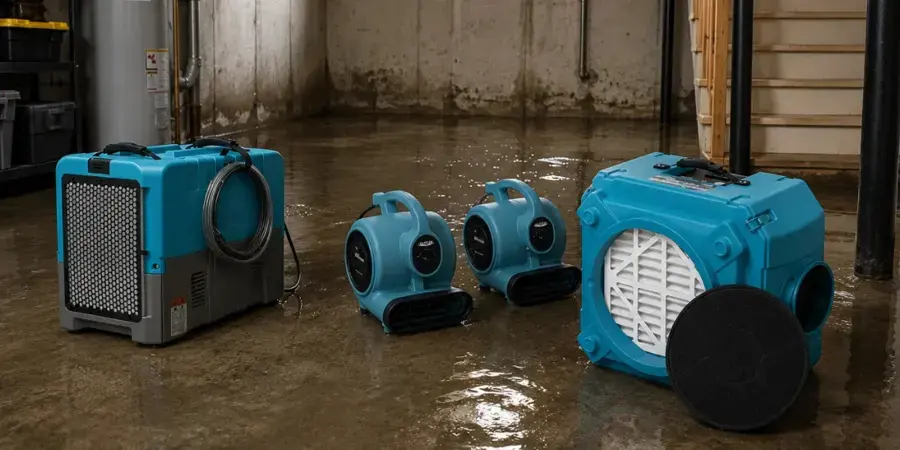
What to do the moment you find water extraction
- Stop the source
Shut the main water valve or the fixture valve if it is safe to reach.
- Cut power to wet circuits
If the breaker panel is dry, switch off circuits that feed the wet rooms.
- Photograph first
Take wide and close photos of the water before moving anything.
- Lift and call
Move rugs and small furniture off the floor, then call the restoration team.
What does water extraction and removal cost in Fontana, CA?
In Fontana, CA, emergency water extraction and the drying that follows typically run $750 to $6,000 or more, depending on the water category, the square footage that is wet, and how long the water sat before extraction started.
- Up to about 200 sq ft
- Clean water, fast start
- Air movers for a few days
- Carpet, pad or planks wet
- Baseboards removed
- LGR dehumidifiers
- Category 2 or 3 water
- Material removal
- Antimicrobial and full drying
What moves the number: water category, square footage, the material class of the floor and walls, and how fast extraction started after the leak.
For a closer planning range, try the water damage cost calculator. Every range here is typical, not a quote.
How water extraction is handled in Fontana
Walkthrough and moisture map
The tech who does the walkthrough finds the source and maps how far the water traveled, with thermal imaging and pinless meters.
Extraction
The extraction crew pulls standing water with truck-mounted extraction so it leaves the building instead of spreading to the next room.
Drying set to the room
The drying team sets air movers to each room's evaporation load and runs LGR dehumidifiers, desiccants for Class 4 materials.
Daily readings to dry
Most crews record readings daily and pull equipment once wet materials sit within 2 to 4 points of a dry reference.
Extraction is the step that decides how long everything else takes. A gallon pulled out as liquid is a gallon the dehumidifiers never have to evaporate, which is why the extraction crew works the floor before a single air mover goes down. On the slab-on-grade homes that fill Fontana, water has nowhere to drain, so it spreads sideways under flooring and into the bottom of every wall it touches.
How extraction works on a Fontana slab
Most crews start with truck-mounted extraction, a high-lift vacuum that sends the water outside to the truck instead of into buckets. Portable units handle upstairs rooms and tight closets.
- Carpet and pad get weighted extraction tools that squeeze water out of the pad
- Tile, laminate and vinyl plank get squeegee wands and floor tools
- Water trapped under laminate or engineered planks is found with pinless meters
- Wet baseboards come off so the extraction crew can reach the wall cavity
Water still spreading across the floor? Every minute it sits, more of it wicks into drywall.
Get Fontana water extraction startedWhat decides what can be saved
The water category matters more than the amount. Clean supply-line water, Category 1, usually allows carpet and pad to be dried in place when extraction starts fast. Water that has touched soil, a drain or a washing machine is handled as Category 2 or 3, and porous materials touched by Category 3 water get removed, not dried. The tech who does the walkthrough records that call on the moisture map before any demolition starts. For flood safety basics, Ready.gov flood guidance and the EPA WaterSense program are good starting points.
After the water is out
Extraction ends when the floor stops giving up water, not when it looks dry. From there the drying team moves into structural drying: air movers set to each room, LGR dehumidifiers, and daily readings until the materials match a dry reference. If the water came from a slab leak or a failed water heater, the source gets fixed first so the floor is not refilling while it dries.
Why a shop vac is not extraction
A household wet vac lifts surface water but leaves the pad and the bottom of the drywall saturated. Truck-mounted extraction pulls far more water per pass, which cuts days off the drying time.
How water extraction work is held to the S500 standard
Rapid local response
The response team answers day or night and gets a crew rolling toward Fontana and the nearby Inland Empire cities, day or night.
IICRC S500 drying standard
IICRC S500 is the industry drying standard. Crews map moisture first and pull equipment only when readings say dry.
Claim-ready documentation
Most crews log daily moisture readings and take timestamped photos before any demolition, which is what an adjuster reads.
Inland Empire water experts
Slab leaks, hard-water pinholes, AC overflows and foothill runoff are the losses Fontana homes actually have.
Water Extraction and Removal coverage across Fontana
The restoration team takes water extraction calls from every Fontana ZIP and the neighboring Inland Empire cities.
The restoration crew takes water extraction calls from North Fontana, Sierra Lakes, downtown, South Fontana and Southridge Village, plus Rialto, Bloomington, Rancho Cucamonga and Ontario.
ZIP codes 92331, 92334, 92335, 92336 and 92337 are all covered.
See every neighborhood and ZIP coveredWater Extraction and Removal questions in Fontana, CA
How soon should water extraction start?
As soon as the source is stopped. Drywall and pad wick water upward for hours, and mold can start inside 24 to 48 hours in a warm Inland Empire home, so the earlier the extraction crew starts, the more stays in place.
Can wet carpet be saved after extraction?
Often, if the water was clean Category 1 and extraction started quickly. The pad is usually replaced because it holds water and breaks down. Carpet touched by sewage or floodwater is removed.
Is a wet vac enough for a small leak?
For a spill on tile, sometimes. For water under carpet, laminate or into a wall, no. A wet vac leaves the pad and wall bottoms saturated, and those are the places that grow mold.
How long does drying take after extraction?
A contained Class 1 or 2 loss usually dries in three to five days. Hardwood, plaster and slab under flooring take longer. Equipment comes out when readings say dry, not on a set day.
Does homeowners insurance pay for extraction?
A sudden, accidental leak is usually treated differently from flooding or long-term seepage. The claim file needs photos and moisture readings. Coverage depends on your policy, so it is worth checking with your own insurer.
What does the extraction crew need from me?
The cross street, which rooms and floors are wet, where the water came from if you know, and whether the source is shut off. That decides which equipment goes on the truck.
Related water damage services in Fontana
Water Extraction and Removal in Fontana? Call now.
The longer the water sits, the further it wicks into slab, drywall and framing. The Fontana water damage pros answer day or night.